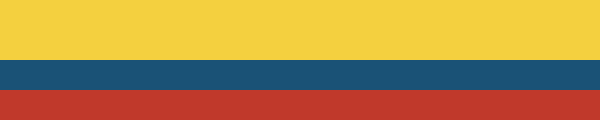
Look at the flags of Colombia, Venezuela, and Ecuador. Yellow, blue, red—the same three colors, arranged in the same horizontal bands. This isn't coincidence. It's memory. It's the visual evidence of a union that ended in 1831 but was never truly forgotten.
The Miranda Flag
The original tricolor was designed by Francisco de Miranda, the Venezuelan revolutionary who preceded Bolívar. Miranda reportedly based the colors on a conversation with the German writer Goethe about primary colors and their emotional resonance:
- Yellow: The gold of the Americas, the wealth of the land
- Blue: The ocean separating the Americas from Spain
- Red: The blood shed for independence
When Bolívar adopted the flag for Gran Colombia, he was adopting Miranda's vision—and all three successor states kept it.
The Flags Today
Colombia: Horizontal bands of yellow (double width), blue, and red. The yellow is wider, representing the gold of the nation.
Venezuela: Horizontal bands of yellow, blue, and red in equal width, with an arc of eight stars and the coat of arms.
Ecuador: Horizontal bands of yellow (double width), blue, and red—nearly identical to Colombia—with the national coat of arms centered.
The variations are minor. The shared heritage is unmistakable.
Panama's Different Path
Panama's flag breaks the pattern: blue and red quarters with white, featuring two stars. This reflects Panama's different historical trajectory—it was part of Colombia until 1903, when U.S. intervention enabled its separation to facilitate Canal construction.
Yet even Panama maintains the Bolivarian connection through its reverence for the Liberator. Bolívar's image appears on Panamanian currency; his birthday is commemorated. The flag may differ, but the heritage remains.
The Power of Symbols
Flags matter. They're the most visible expression of national identity, displayed at every government building, school, and official event. That Colombia, Venezuela, and Ecuador chose to keep the Gran Colombian colors—when they could have designed anything—reveals something profound.
These nations didn't want to erase their shared history. Even as they went their separate ways politically, they retained the visual symbol of unity. Every Colombian, Venezuelan, and Ecuadorian child grows up seeing these colors, absorbing the message: we were once one.
A Flag for the Future?
If a Gran Colombia confederation emerged, it wouldn't need to invent new symbolism. The yellow, blue, and red are waiting—shared colors for a shared future, connecting present aspirations to 200 years of history.
The flags already proclaim what Petro proposes: these nations belong together.
Sources
- • Vexillological studies of Latin American flags
- • Historical documentation of Miranda's flag design
- • National flag regulations of Colombia, Venezuela, Ecuador